

Native American Heritage Month Booklist
Stories that shape the lands we call North America — and the ways we honor them today.
11/18/20257 min read
This collection of picture books is part of our month-long “Curiosity Study,” where children explore the stories, cultures, and voices that shaped—and continue to shape—the lands we now call North America.
Whether you're a homeschooling family, an elementary educator, or a parent hoping to deepen conversations at home, this guide offers gentle entry points for learning together. Each book includes a quick summary, age-appropriate discussion prompts, hands-on activity ideas, and even a Chicago field trip tie-in so families can bring learning into the world around them.
Most importantly, these stories invite children to notice, listen, and reflect on our essential question: “Whose stories shaped this land — and how can we honor and continue this legacy today?”
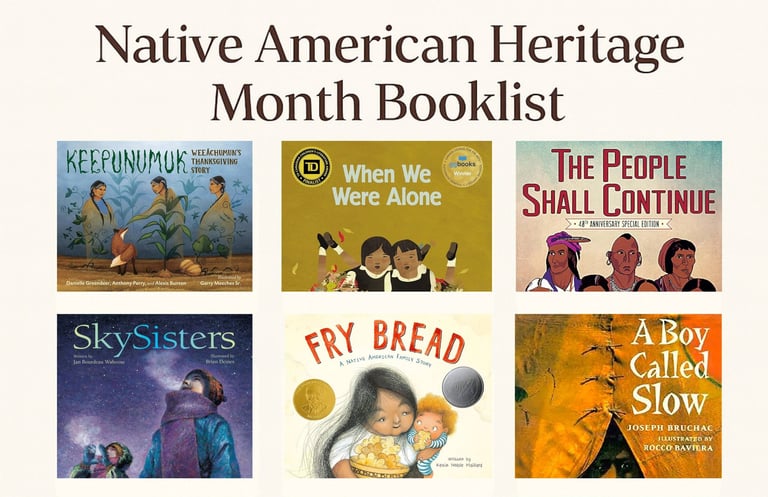

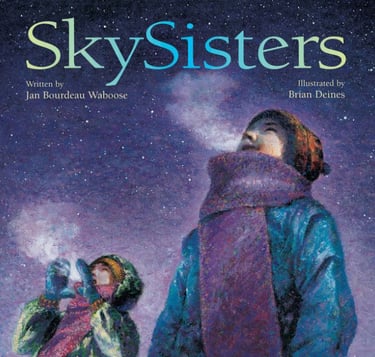
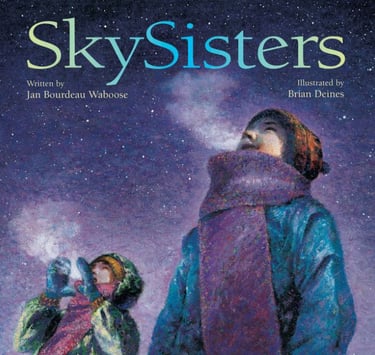
1. The Sky Sisters by Jan Bourdeau Waboose
Read: Two Ojibwe sisters journey into the winter night to witness the Northern Lights. Their adventure helps children understand that the land itself carries teachings, and that paying attention is a way to honor Indigenous knowledge and continue its legacy.
Discuss:
K–1: What do the sisters discover in the sky?
2–3: How do they show respect for nature?
4–5: What values or teachings guide their journey?
Do: Create a "Night Sky Story Cloth" with inspired by the sisters' winter journey and the Indigenous tradition of learning from the land and the sky. Use dark paper or fabric, chalk pastels, and natural textures (leaves, twigs, pine needles) to create your own night sky inspired by the sisters’ journey. Invite kids to add Northern Lights colors and include one natural element to show the connection between land and sky.
Chicago Connection: Visit the Adler Planetarium and explore constellations, winter skies, and Aurora Borealis connections.
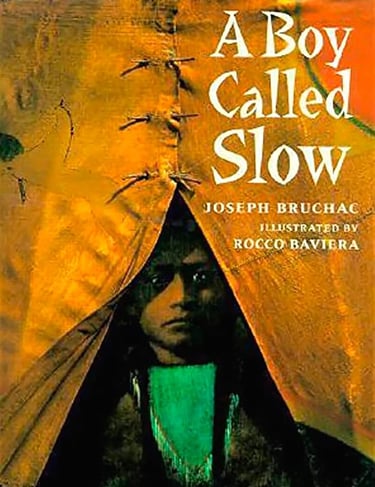
2. A Boy Called Slow by Joseph Bruchac
Read: This biography of Sitting Bull’s childhood shows how Lakota naming traditions reflect character, responsibility, and leadership. It helps children understand that many Indigenous leaders shaped North America through values rooted in courage and community.
Discuss
K–1: Why did Slow want a new name?
2–3: How did he show bravery as a child?
4–5: How do names connect to responsibility?
Do: Make a “Meaningful Name Mini-Book.”
Invite kids to create a tiny booklet explaining the meaning behind their name or a name they wish to earn based on qualities they value.Chicago Connection: Visit the Gichigamiin Indigenous Nations Museum (Evanston) to explore Plains Nations exhibits, leadership traditions, and stories of community responsibility.
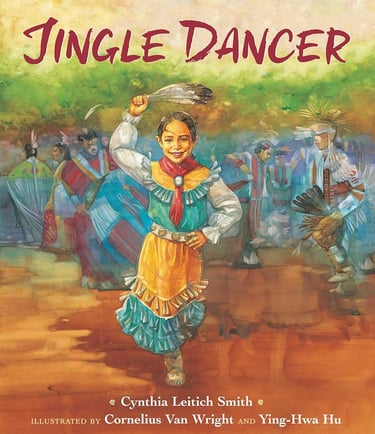
3. Jingle Dancer by Cynthia Leitich Smith
Read: Jenna gathers jingles for her first dance regalia by visiting relatives and friends. Her journey highlights community care, reciprocity, and the ways cultural traditions are carried forward together.
Discuss
K–1: How does Jenna get her jingles?
2–3: What does her community teach her?
4–5: How do people keep traditions alive?
Do: Make simple jingles using small bells, foil, or metal lids and explore how movement creates sound. Talk about how sound can honor tradition and bring people together.
Chicago Connection: Connect with the American Indian Center of Chicago to learn about cultural events, regalia, and dance traditions.
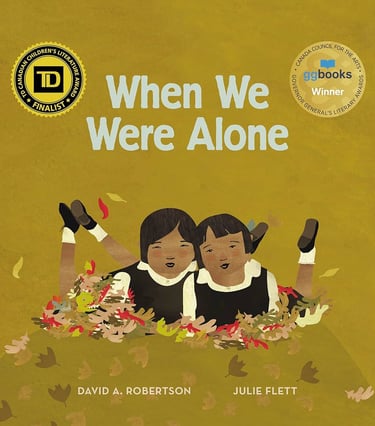
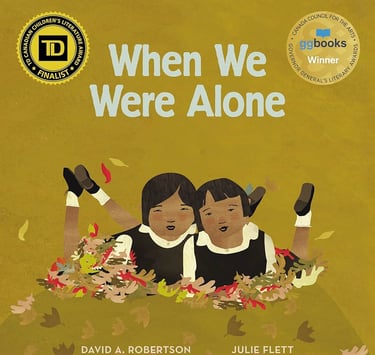
4. When We Were Alone by David A. Robertson
Read: Through warm conversation with her grandmother, a child learns about the history of residential schools and the resilience of Cree culture. It invites children toward empathy, truth, and honoring stories that were nearly erased.
Discuss
K–1: What does the girl learn from her grandmother?
2–3: Why couldn’t children speak their own language?
4–5: How does the story show cultural survival?
Do: Create a “Colors of Identity” paper weave.
Use two colors of paper—one representing parts of yourself (family, culture, tradition) and one representing values you carry (kindness, courage, creativity). Write a different part of who you are and values you carry and weave the strips together to symbolize how identity stays strong even through challenges.Chicago Connection? Visit the 4000N Walking Museum (Albany Park) to explore Indigenous histories along the Chicago River and reflect on memory, resilience, and the stories carried by the land. We visited the Serpent Mound in Horner Park, and the girls loved it.
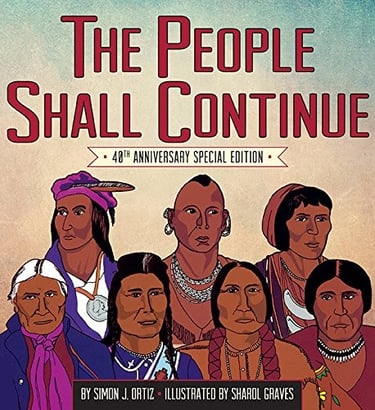
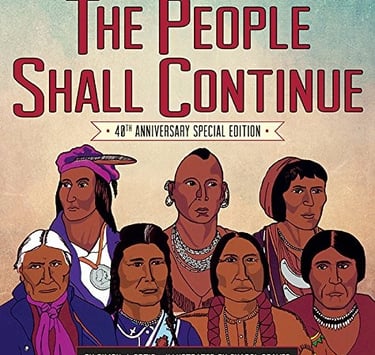
5. The People Shall Continue by Simon J. Ortiz
Read: This sweeping narrative traces the histories and experiences of many Indigenous Nations, highlighting resilience, community strength, and cultural continuity. It helps children understand Native history as ongoing, interconnected, and alive today.
Discuss
K–1: What keeps the people strong?
2–3: How do communities protect their traditions?
4–5: What does resilience look like in this story?
Do: Make a “Timeline of Strength.”
Invite children to illustrate 3–5 moments from the book that show courage, community care, or cultural continuity. Add one moment from their own life where they showed strength or helped someone else—connecting personal growth to the story’s larger themes.Chicago Connection: Visit the Field Museum’s Native Truths: Our Voices, Our Stories exhibit to learn from contemporary Indigenous artists, scientists, and community leaders.
🔗 https://www.fieldmuseum.org/exhibitions/native-truths-our-voices-our-stories
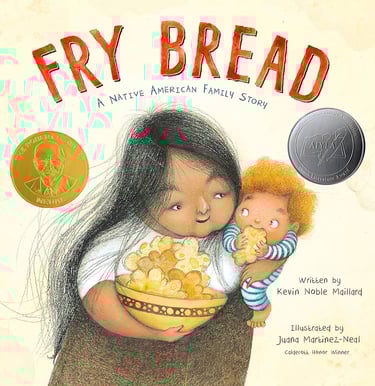
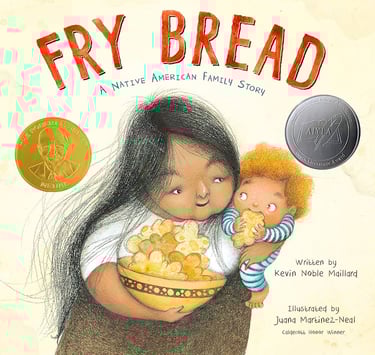
6. Fry Bread by Kevin Noble Maillard
Read: A poetic celebration of family, history, and the diversity of Native Nations, Fry Bread shows how food can carry stories, memories, and identity across generations. It invites children to reflect on how what we eat connects us to place, culture, and one another.
Discuss
K–1: What does fry bread mean to the family?
2–3: How is fry bread connected to history?
4–5: How does the book show intertribal diversity?
Do: Create a “Family Food Identity Map.”
Invite children to draw a simple map or diagram showing foods that matter in their family—recipes, ingredients, or dishes tied to memories or culture. Add notes or symbols for who makes the food, where it comes from, and why it’s meaningful.Chicago Connection: Connect with the Chi-Nations Youth Council to learn about Indigenous foodways, gardening, seed-saving, and community events.
🔗 https://www.chinationsyouthcouncil.com/
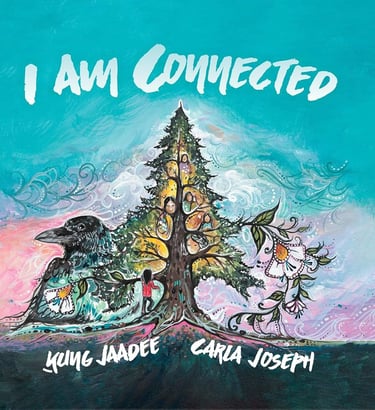
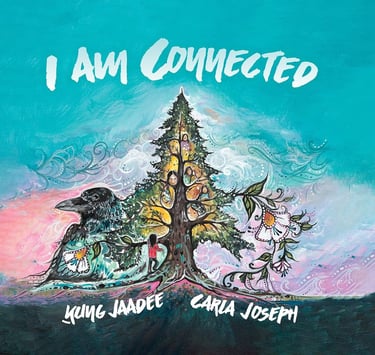
7. I Am Connected by David A. Robertson
Read: This gentle story explores the interconnectedness of all beings—water, land, animals, and people—reflecting Indigenous worldviews of reciprocity, belonging, and responsibility to the natural world.
Discuss
K–1: What does the child feel connected to?
2–3: How does everything depend on each other?
4–5: What responsibilities do we have toward nature?
Do: Create a “Connection Web.”
Use yarn or string to link drawings or objects representing water, plants, animals, people, and land. Show how each depends on the others, then remove one strand to notice how the whole web changes—modeling reciprocity and care.Chicago Connection: Visit the North Park Village Nature Center to observe real ecosystems and the relationships between plants, animals, and the land.
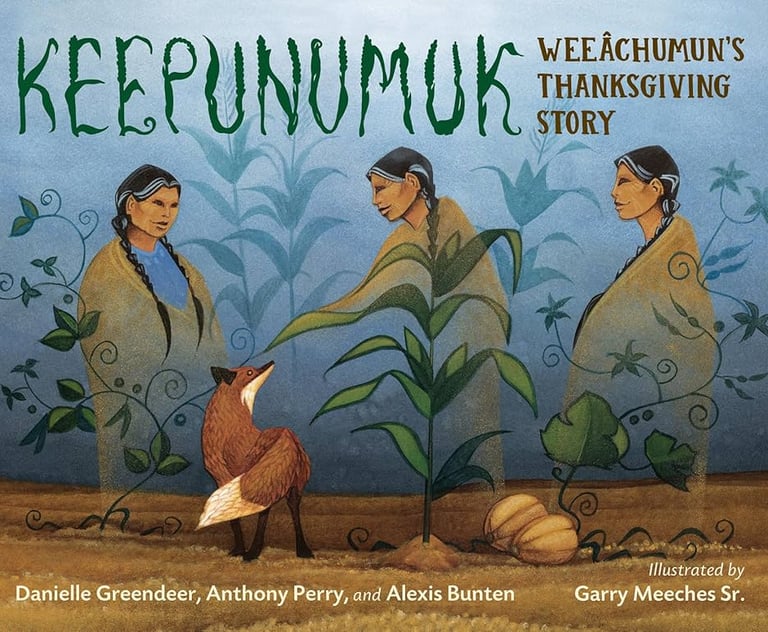
8. Keepunumuk: Weeachumun’s Thanksgiving Story by Danielle Greendeer, Anthony Perry, and Alexis Bunten
Read: Told from the perspective of Weeachumun (Corn), this story centers Wampanoag knowledge, land stewardship, and the true history behind the “first thanksgiving.” It invites children to understand the holiday through Indigenous perspectives and teachings about gratitude and reciprocity.
Discuss
K–1: What does Corn teach the children?
2–3: What new perspectives did you learn?
4–5: How does this story shift your understanding of history?
Do: Plant a mini Three Sisters garden (or a symbolic version).
Use small pots or cups to plant corn, beans, and squash—or draw/assemble a paper version. Talk about how each plant helps the others grow and how this teaching reflects community care and interdependence.Chicago Connection: Visit the Kilbourn Park Organic Greenhouse to explore Indigenous agriculture, companion planting, and how plants support one another.
9. Be a Good Ancestor by Leona Prince & Gabrielle Prince
Read: A hopeful, future-focused story that encourages children to act with kindness, courage, and long-term thinking—honoring those who came before us by becoming thoughtful ancestors for those who will come next.
Discuss
K–1: What kind thing can you do today?
2–3: What choices help future kids?
4–5: What does it mean to think like a “future ancestor”?
Do: Decorate a “Future Ancestor Promise Pebble.”
Invite children to choose a small smooth stone and add a word or symbol representing a promise they want to carry forward—like care, courage, kindness, or protection. Keep the pebble as a reminder of the responsibility we have to the land and to each other.Chicago Connection: Visit Friends of the Chicago River – River Park to explore restoration and stewardship in action, and discuss how caring for the river today helps future generations.


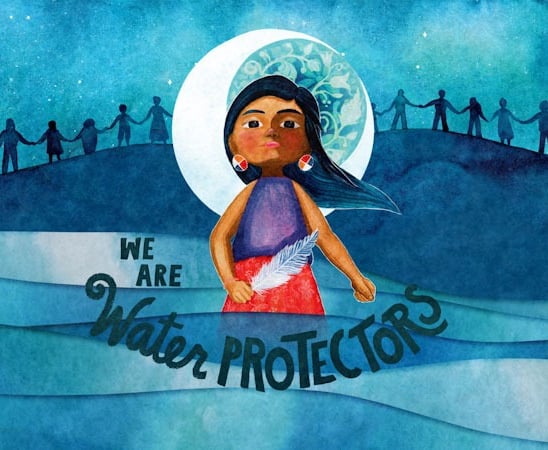
10. We Are Water Protectors by Carole Lindstrom
Read: Inspired by Indigenous-led movements across North America, this lyrical story celebrates the courage of communities who protect water—an essential, living relative in many Native cultures. It helps children understand stewardship, justice, and the power of young people to care for the Earth.
Discuss
K–1: Why is water important?
2–3: How do people protect water?
4–5: What does it mean to stand up for something you believe in?
Do: Create a “Water Is Life” mural panel.
Use blues, greens, and natural textures to paint or collage a small panel showing why water matters. Combine panels as a class or family to create a larger mural that reflects collective responsibility and care.Chicago Connection: Walk the Chicago River or join a community event through Friends of the Chicago River to explore local waterways, learn about restoration efforts, and reflect on how communities protect water today.
🔗 https://www.chicagoriver.org/
Closing Reflection
Stories help us understand where we come from, who we are responsible to, and how we can walk with more care in the world. Each of these books invites children to see Native histories and cultures as living, present, and deeply connected to the lands we call home.
As families and educators, we can honor this learning by slowing down with our children—listening, noticing, and exploring the places around us with curiosity. Together, we can nurture a generation of kids who understand that the stories of First Peoples continue today, and that we each play a part in honoring that legacy with respect, gratitude, and action.
Let's Connect!
Join our monthly adventures and stories
© 2025. All rights reserved.